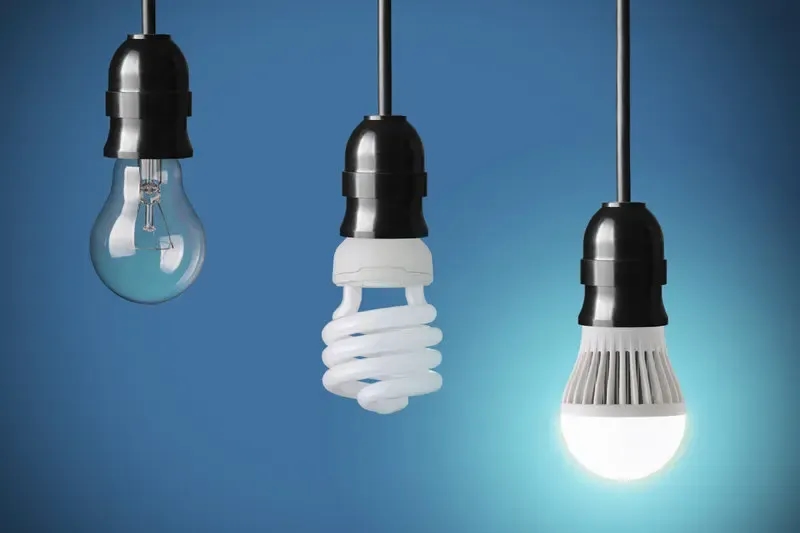
Useful Information About LED Lighting
WHAT IS LED AND WHY LED?
LED is an abbreviation of the English word "Light Emitting Diode" and is used as a light source in many areas such as the automotive industry, electrical industry, and all types of lighting starting from home, industrial, commercial, street lighting... Our focus will be directed towards LED in the field of home and commercial lighting. With the development and improvement of technology, LED has recently become powerful enough and commercially viable to be used in mass production and as a replacement light for classical lighting.
The speed of development and advancement of LED technology is such that all commercial lighting manufacturers are gradually 'shutting down' production lines of products with classical light sources and are releasing LED variants of products with superior technical characteristics, longer lifespan and great energy consumption savings to the market. The broader use of LED technology is supported by increasingly frequent guidelines and directives from the EU that primarily relate to energy savings and energy efficiency, and the reasons for controlled waste generation and its recycling, the need to reduce light pollution, reduce the heat island effect in urban environments and similar are not negligible.
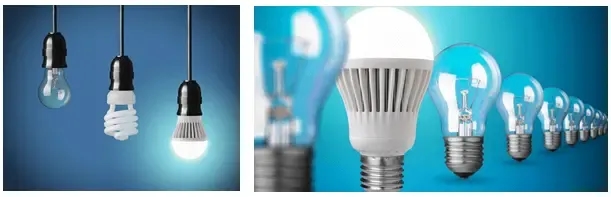
We are witnesses that the well-known classic incandescent light bulb of 100W power is no longer produced and it is a matter of time when its siblings of 75, 60, 40W will be withdrawn from commercial sale. What is uneconomical in the traditional light bulb is its inefficiency because only 10% of the energy consumed goes to light and as much as 90% of energy is lost on heat emission.
Because of all this, LED lighting is increasingly used as replacement lighting for industrial, street, tunnel and other lighting. Also, LED lighting is an increasingly common choice of individual consumers in residential buildings and homes since the savings compared to classic light sources are obvious regardless of the somewhat more expensive initial investment value.
Below we give summarized advantages of LED lighting compared to traditional:
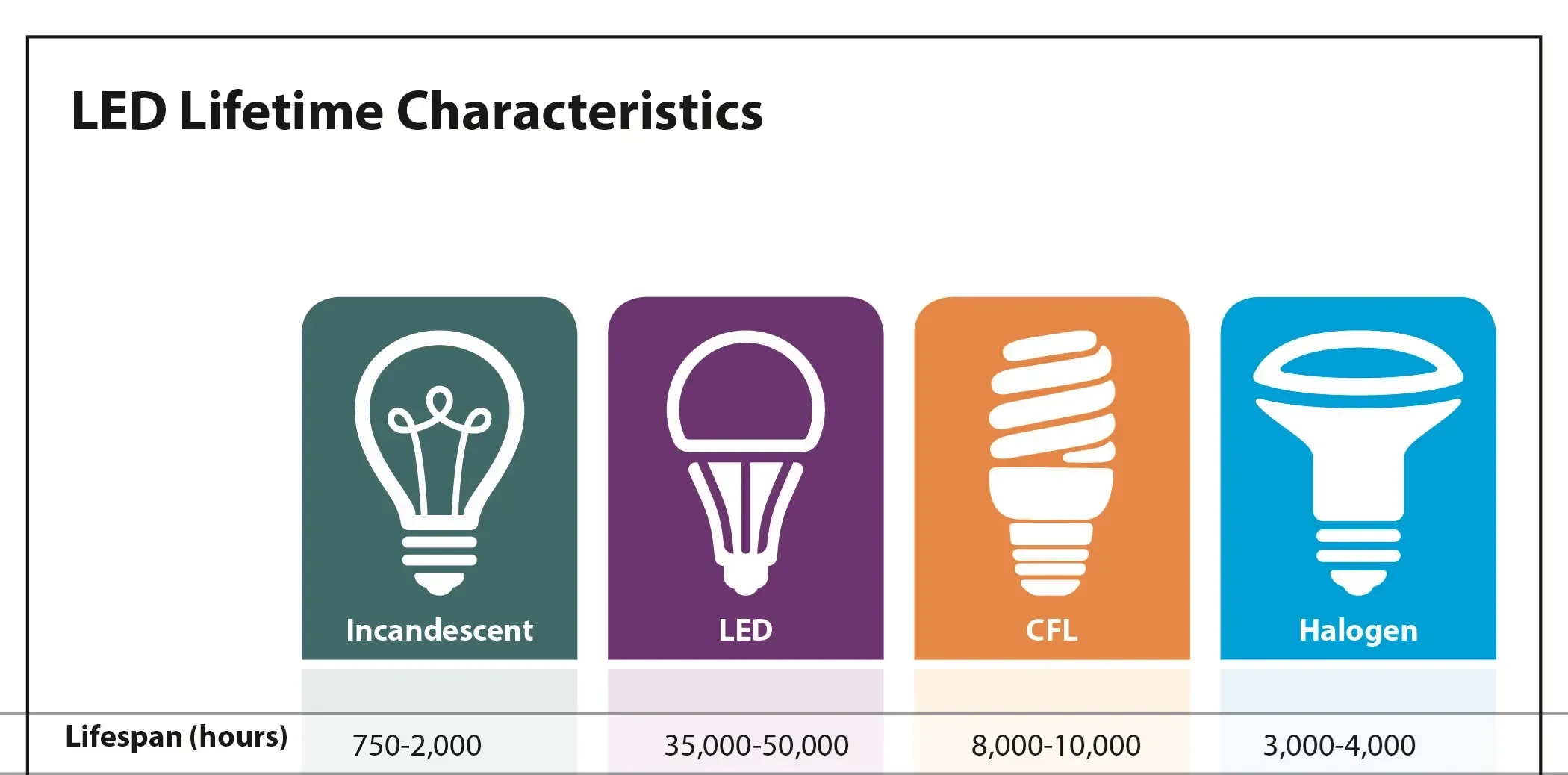
• LED light source has a much longer expected working life and amounts to up to 50,000 hours
• Lower electricity consumption means greater savings for end users
• LED bulbs do not contain mercury as is the case with energy-saving CFL bulbs. Mercury is very toxic and poisonous
• LED bulbs have a longer life and solid construction. Even if it falls on the floor, there is a high probability that it will not break and will function normally
• LED bulbs heat up very little. After a full day of operation, only slight warmth is felt when holding the bulb in hand
• LED technology allows creating different light colors in the range from yellow to distinctly white and bluish (from 2700K to 6000K and more)
• LED bulbs turn on instantly without the need for time to reach full operating capacity as is the case with energy-saving CFL bulbs
WHAT IS THE WORKING LIFE OF LED LIGHT SOURCE?
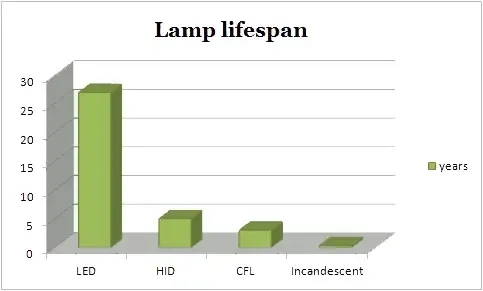
You will often see on LED bulb packaging in large markets that, in addition to energy savings of almost 90% compared to conventional lighting types, they also have an extremely long working life which is declared, depending on the manufacturer, from 15,000 to 35,000 working hours and some models have a declared working life of up to 50,000 working hours.
Working life is defined as the time period within which the LED bulb lights with intensity up to 50% of the initial under conditions of normal temperature, current voltage, and working environment. This means that under ideal conditions LED bulbs do not stop working but the light intensity gradually decreases until it becomes invisible to the human eye.
For certain luminaires with LED light sources, for example, manufacturers on declarations indicate that the expected service life of the product is up to 50,000 operating hours. But is it really so?
Honestly, not really! However, this does not mean that after achieving 35,000 or 50,000 hours of operation the bulb will stop working, but the intensity of light it emits will be less compared to the initial period of bulb operation. This weakening is not great and amounts to about 10% over a period of several years (if a new bulb gave 1000lm, after several years of use it can be expected to give 900lm). By simple calculation we come to the data that with optimal and proper use of LED bulbs, from 7 to 8 hours daily, their service life can be longer than 20 years. What is interesting about LED bulbs or LED light sources is that most often it is not the LED chips and diodes that fail, but the electronics that are in them, which theoretically means that with repair their service life would be even longer, but the prices of LED bulbs are so low today that it is not profitable to think about it at all. With lamps, the situation is the same, with electronic components such as power supplies being serviced and replaced without problems.
WHAT IS CRI INDEX?
Color Rendering Index or color reproduction index is a quantitative measure that relates to how realistically a light source illuminating an object displays the color of that object compared to natural i.e. daylight. It is expressed in values from 1 to 100 and the higher the index value, the higher quality the light source is. By natural light we mean sunlight which has a CRI index of 100.
When CRI is 0 then all colors look the same, and when CRI is 100 then the true, natural color of the observed object is displayed. In principle, light sources with a CRI index between 80 and 90 are considered good while light sources with a CRI above 90 are considered excellent.
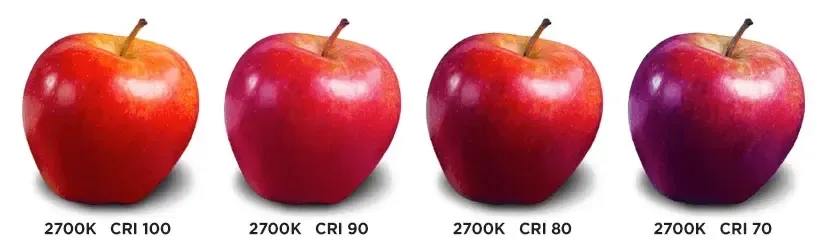
The image shows an example of CRI index values and how it affects the color reproduction of the observed apple. It should be noted that the CRI index is independent of the color temperature of the light and relates exclusively to the light source. Having this in mind, it should be noted that there are light sources that emit light of the same color (e.g. 2700K) but have a different CRI index, just as shown in the image with apples.
WHAT IS LIGHT COLOR TEMPERATURE?
Light color temperature represents the color of light from a lamp or light source and is expressed in Kelvins. We define light color temperature by heating an absolute black body (a concept in physics known as a body without reflection properties) to a certain temperature, and this heated body at certain temperatures takes on a very specific color so that at lower temperatures the heated body is dark red in color and as the temperature increases it fades and takes on more and more blue elements in the spectrum. The image below shows the spectrum of light colors ranging from pale red to pale blue.
Having this in mind, and for the purpose of understanding the technical characteristics of light sources and lamps, we can define a specific light color depending on the value expressed in Kelvins in the following way:
– 2700K (Extra Warm White – Extra warm white light)
– 3000K (Warm White – Warm white light)
– 4000K (Neutral White – Neutral white light)
– 5000K (Cool White – Cool white light)
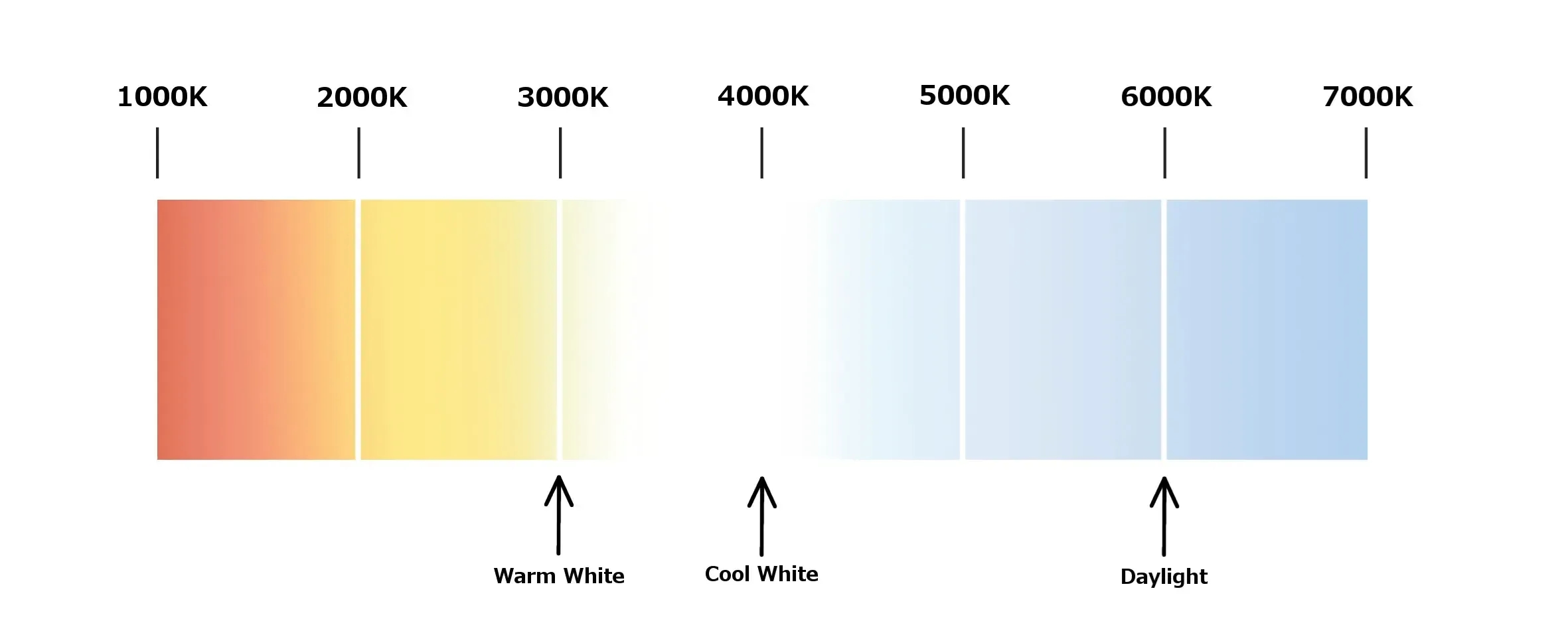
Warm white the light color is below 3300K and is similar to the color of a classic incandescent bulb. It contains more elements of the red spectrum and contributes to a pleasant and positive mood. Suitable for households, especially for living rooms and bedrooms, residential buildings, hotels…
Neutral white the light ranges from 3300K to 5000K. It promotes a positive and pleasant mood and is recommended for shops, hospitals, commercial buildings and offices, restaurants, waiting rooms. In residential spaces it is recommended for workrooms, as it produces slightly more light than warm bulbs and, due to its neutral light color, puts less strain on the eyes during work.
Cool white the light color is closest to natural daylight and has values above 5000K. It promotes a pleasant working environment and concentration. Suitable for offices, commercial buildings, meeting rooms, shop windows, libraries…
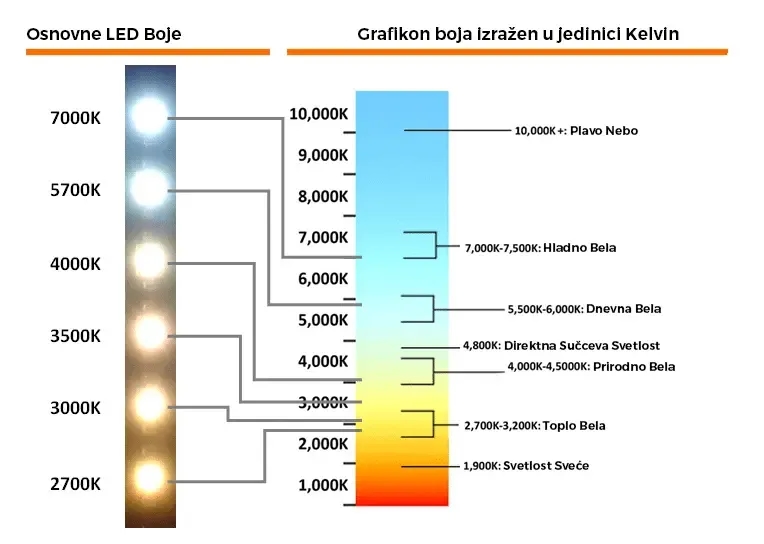
In the chart, you can see the light color expressed in Kelvins, compared with candlelight, daylight, or the color of the sky.
In addition to the mentioned shades of light colors, light sources can also have other colors similar to classic LED RGB diodes – for example red, green, blue and other colors that are created by mixing the three mentioned. These light colors are rarely used in home settings but have frequent application in illuminated advertisements. More will be said about this in one of the future texts.
WHAT IS IP PROTECTION?
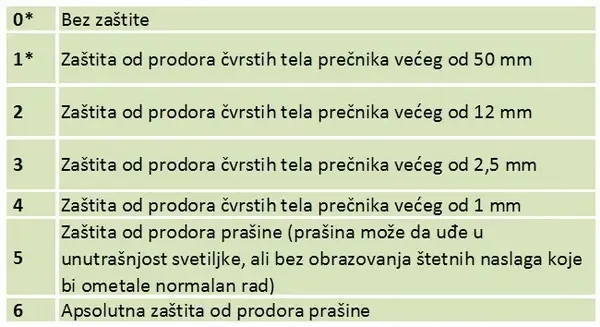
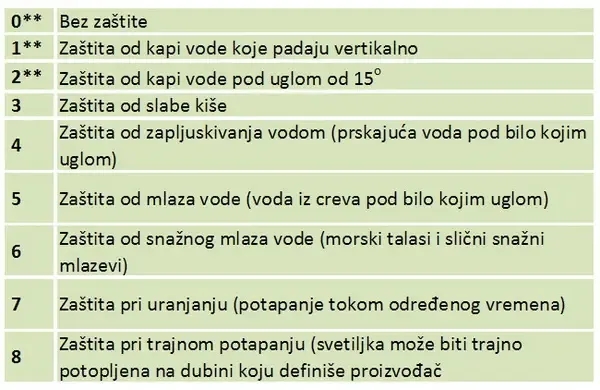
IP protection (short for Ingress Protection) of luminaires represents the level of protection against the ingress of solid objects and liquids and is precisely defined by the international standard EN60598. The designation consists of the IP marking and two numbers (e.g. IP20; IP44; IP65…) where the first number can have a value from 0 to 6 and represents the degree of protection against the ingress of foreign solid objects, while the second number can have a value from 0 to 8 and represents the degree of protection against the ingress of liquids.
Numbers marked with an asterisk are not allowed in lighting.
Definitions of the first (0-6) and second (0-8) numbers in the IPxx designation:
WHAT IS IK PROTECTION?
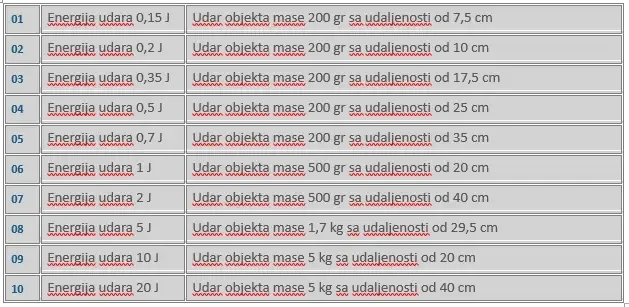
IK protection represents the degree of impact resistance and expresses the level of protection from external mechanical impact and is defined by the international standard EN62262.
The marking of the degree of mechanical impact resistance is IK followed by a value that can be in the range from 01 to 10. The table below provides a more detailed explanation of mechanical impact resistance depending on the IK protection value:
WHAT IS LUMINOUS FLUX AND WHAT IS LUMEN (lm)?
Luminous flux represents the total amount of light emitted by a light source. Its unit of measurement is the lumen (lm).
It follows that a lumen is the amount of light energy that passes through a unit area of a sphere of unit radius every second, at whose center there is a light source with an intensity of 1 candela (cd).
To further clarify the concept of flux, we will provide an example of LED bulbs where, in addition to the defined power, the amount of lumens is also defined on the packaging. During the period when the standard lighting was the standard, incandescent bulb with a heated filament, we were informed about the strength of the bulb and the light it emits through the power expressed in watts (100W, 75W, 60W, 40W bulbs...) Newer lighting technologies, primarily LED, do not take into account the power of the luminaire but lumens, and they are the only reliable measure of what kind of light the bulb will emit in your space. More will be said about these and similar matters in a special section dedicated to purchasing LED bulbs.

WHAT IS LIGHT INTENSITY AND WHAT IS CANDELA (cd)?
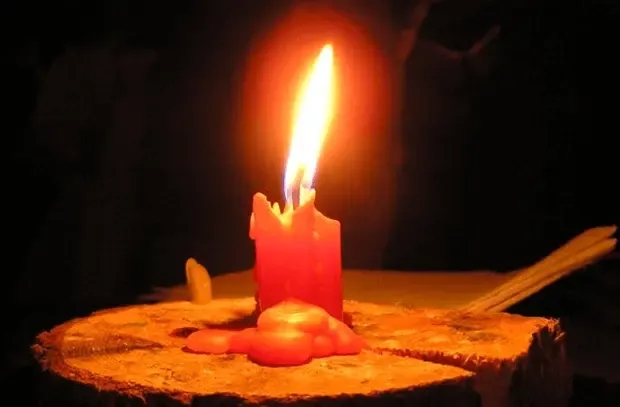
The candela is the unit of measurement for luminous intensity according to the International System of Units and indicates the intensity of light that a light source emits in a specific direction. It represents the number of lumens at a specific angle of emitted light.
To further clarify the concept of luminous intensity, let's take as an example an ordinary candle in our household that emits light with an approximate intensity of 1cd. An even more illustrative example of measuring light intensity at a specific angle of emitted light is if we imagine a 25W lamp that produces about 1700lm. If that light radiates almost equally in all directions, it will have an intensity of approximately 135cd. If we focus on a light beam of 20 degrees, we will have a light intensity of approximately 18000cd.
The luminous intensity of LED diodes is measured in millicandelas and ranges from 50 mcd to 15000 mcd, or 15cd.
WHAT IS ILLUMINANCE AND WHAT IS LUX (lx)?
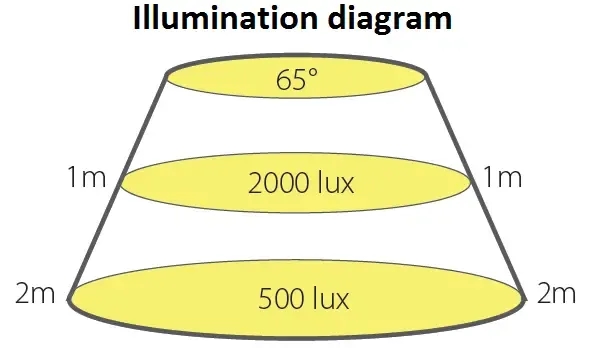
Illuminance represents a measure of the amount of luminous flux that falls on a specific surface. The unit of measurement for illuminance is 1 lux (lx). The amount of illuminance depends on the space being illuminated, so for example, a workspace in front of a computer requires 500lx, while for a pedestrian zone or corridor inside a building, 100lx is quite sufficient.
From this it follows that lux (lx) is the unit of measurement for light intensity according to the International System of Units and represents the illuminance of a surface of 1m2 on which a uniformly distributed luminous flux of 1 lumen (lm) falls.
The difference between lux and lumen is that lux accounts for the area over which the luminous flux spreads. To make this clearer, it should be said that 1000 lm (lumens) concentrated in an area of 1m2 illuminates that surface with an illuminance of 1000 lux. The same 1000 lm (lumens) spread over an area of 10m2 creates dimmer lighting of only 100 lx (lux).
WHAT IS LUMINOUS EFFICACY AND HOW IS IT DESIGNATED?
Luminous efficacy represents the output of a light source in relation to the electrical energy source, expressed in lumens (lm) per unit of input power in watts (W). The concept of luminous efficacy can often be seen in luminaire technical sheets, whereby manufacturers, guaranteeing the authenticity of the data, demonstrate the economy of the lamp by making a correlation between the consumption of electrical energy on one side and the amount of light that the lamp, i.e. the light source, emits on the other side.
Luminous efficacy as a concept should be separated from the concept of luminaire efficiency (LOR – Lighting Output Ratio), which represents the ratio between the luminous flux of the luminaire and the luminous flux of the light source contained within it. Namely, the luminous flux of the light source (bulbs, LED diodes...) is always greater than the luminous flux of the luminaire, which loses a certain amount of luminous flux due to its construction, housing, additional optical elements, etc. So, for example, if the luminous flux of the light source is 100lm/W and the luminous flux of the luminaire is 90lm/W, the value of the luminaire efficiency, i.e. LOR, is 0.90.
LIGHT DIMMING – DIMMING
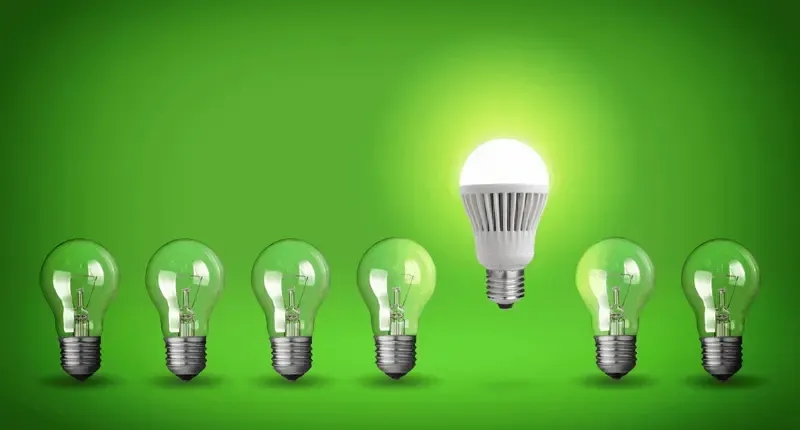
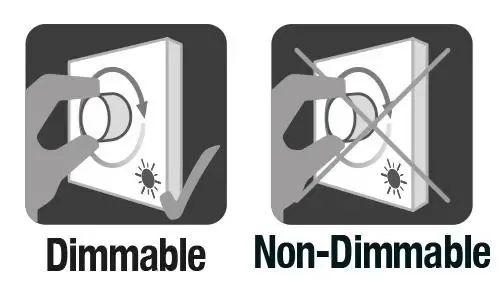
Technology that enables the desired level of light intensity is achieved by reducing the voltage at the light source. It is important to note that not all light sources have the ability to dim light and that this capability reduces the lifespan of the light source.
The electronics implemented in LED bulbs are not designed for use with dimmable switches. If used with them, the bulb's lifespan is reduced. However, there are special LED bulbs that are adapted for use with dimmable switches. They are somewhat more expensive than regular bulbs, but since they are adapted for this mode of use, their working life is not reduced, making them more cost-effective to purchase in such cases.
A SHORT GUIDE TO BUYING LED BULBS
Buying traditional, incandescent bulbs did not require any special prior knowledge. For years, people knew from experience which bulb gives what amount of light, depending on the power (100W, 75W, 60W, 40W), so buying classic bulbs was more than simple.
However, with the gradual development of other lighting technologies, primarily LED, classic incandescent bulbs are slowly but surely losing their primacy in the market, so it often happens that users are not sure which LED bulb should replace the existing classic bulb of, for example, 60W.
In recent years, LED lighting has become affordable on the market, but choosing the right LED bulb is not as simple and easy a task as it seems at first glance.
In this text, we will draw your attention to important things you should consider when buying and how to properly choose the right LED bulb. To start, it would be good to pay attention to the following tips:
– Choose LED bulb strength by comparing Lumens (lm) and not Watts (W), which is not the case with incandescent bulbs
– Pay attention to the bulb's light color expressed in Kelvins (K)
– If you use a dimmer to dim the light, buy a dimmable LED bulb
– Check the warranty! Quality LED products often have a warranty of more than 2 years
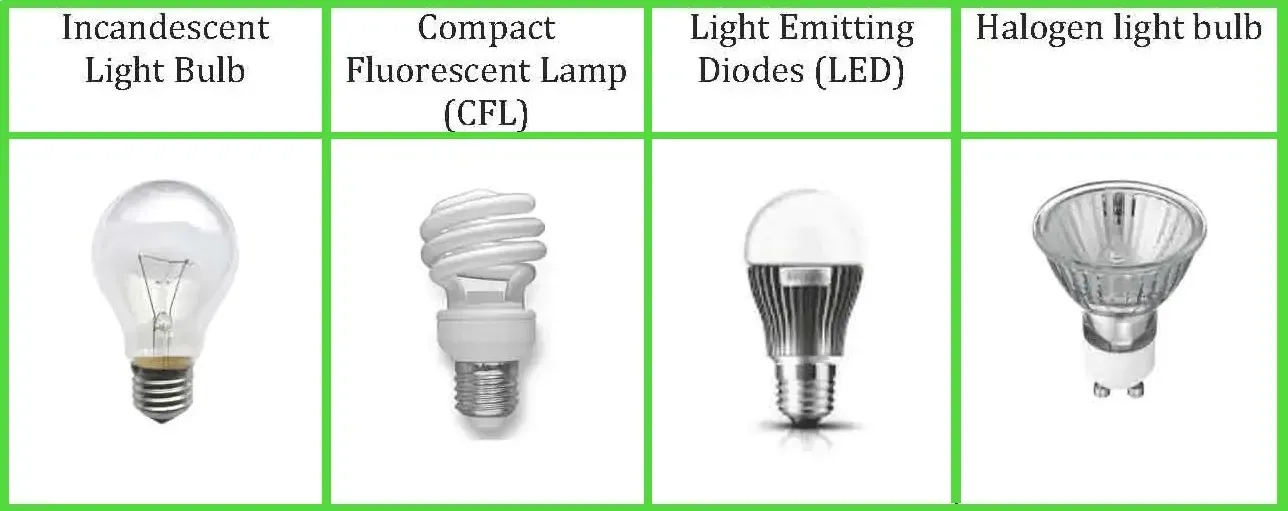
Before we analyze the above-mentioned points, we will touch upon the bulbs that are most commonly used today in our homes:
– Classic, incandescent bulbs – convert 10% of consumed energy into light and the remaining 90% of energy into heat
– Halogen bulbs – convert 5-10% of consumed energy into light and the remaining 90-95% into heat
– So-called energy-saving bulbs (fluorescent and CFL) – convert 50% of consumed energy into light and the other 50% of energy into heat
– LED bulbs – convert 80% of consumed energy into light and only 20% into heat
High efficiency and exceptionally long lifespan represent the main advantages of LED bulbs compared to other types of bulbs. Comparing an LED bulb with a classic, incandescent bulb, it is not difficult to conclude that LED has far lower electrical energy consumption for the same amount of light output, and additionally lasts at least 15 to 20 times longer.
Despite having a slightly higher price compared to classic and other types of bulbs, LED bulbs are in the long term far more cost-effective compared to all others.
LED BULB LIGHT INTENSITY
As we mentioned earlier, every bulb, regardless of type, converts consumed electrical energy (expressed in watts W) into light (expressed in lumens – lm). In addition to this information, its energy efficiency is also important, which is reflected in how much of the consumed electrical energy is converted into light and how much into heat.
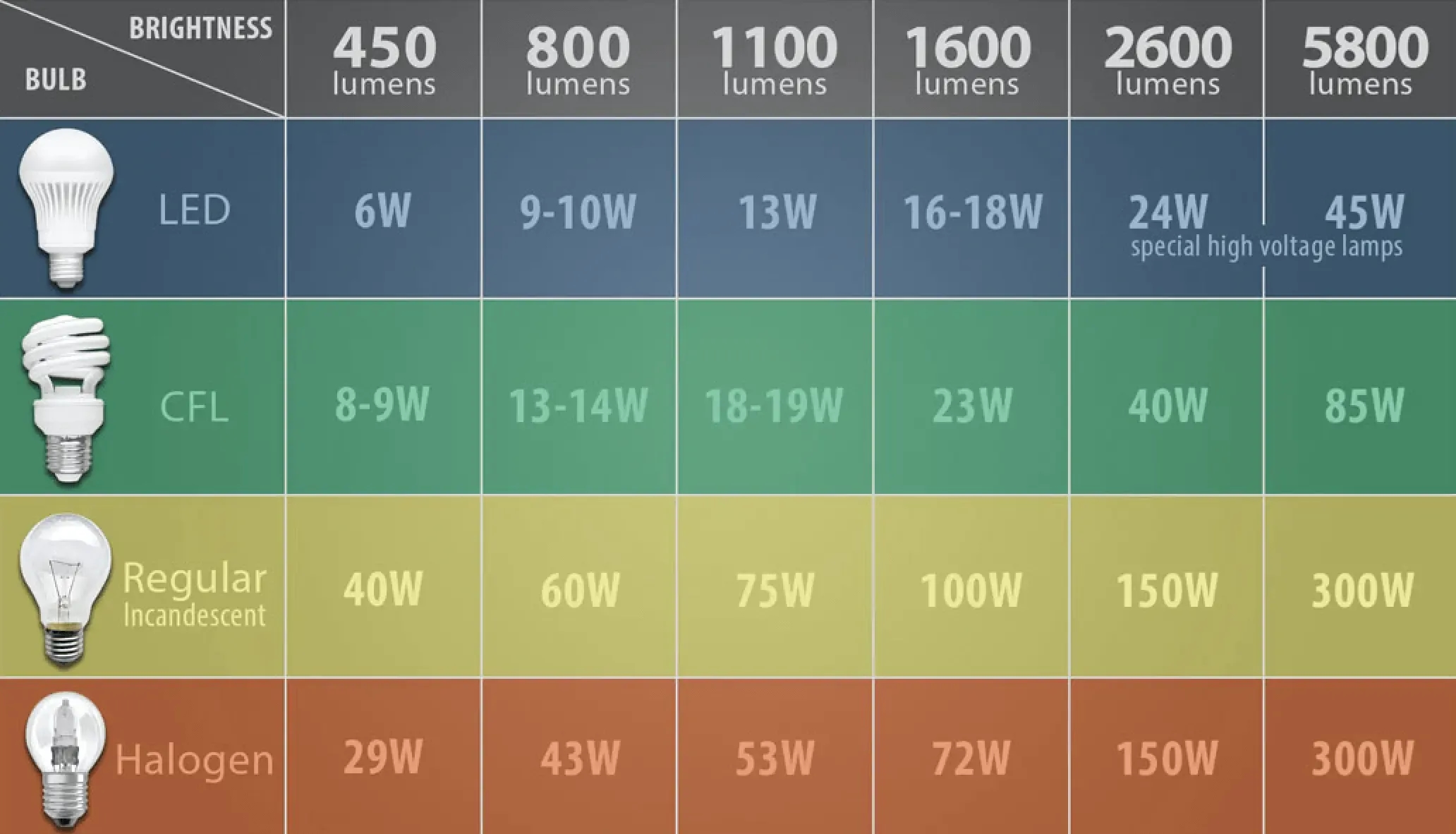
As we explained earlier, LED bulbs are much more efficient than traditional incandescent bulbs, so they can provide the same amount of light with energy consumption 5 to 10 times lower. This is where we get to the essence when comparing traditional with LED bulbs. Namely, a 75W incandescent bulb will be replaced by a 10W LED bulb, which seems confusing to many, so they often choose much more powerful LED bulbs than they actually need.
From this we can derive the first rule when buying LED bulbs: when replacing a traditional incandescent bulb with an LED bulb, we should compare lumens and not watts!
To get a sense of the relationship between lumens and the power of LED bulbs compared to neon, energy-saving CFL and traditional bulbs, see the following table:
The values given in the table above are approximate and specific values may vary depending on the LED bulb model, type and kind of LED chip, but they represent a good guideline for choosing adequate LED bulbs of appropriate power with which you plan to replace traditional bulbs.
COLOR AND WARMTH OF LED LIGHT BULBS
The unit for light color is Kelvin (K) and the lower the Kelvin value, the warmer (yellow) the light color, and vice versa, the higher the value, the cooler (bluish) the light. For home use, warm light color of 3000K is most commonly used.
The second rule for purchasing LED bulbs relates to the appropriate selection of light color depending on the purpose of the rooms. For most residential rooms, a light color of 3000K is recommended, while for work rooms, kitchens, bathrooms, somewhat cooler light colors with a value of 4000K are recommended.
Which light color you will use for which space is a matter of personal choice and preference, and here are some recommendations:
– Warm white light color 3000K – most commonly used for home lighting (living and bedrooms). The light is warm and pleasant and closest to the light provided by halogen or traditional bulbs.
– Neutral white light color 4000K – most suitable for bathrooms, kitchens, commercial spaces, and offices. LED bulbs that emit this light color provide slightly more brightness than LED bulbs that emit warm white light color.
– Cool white light color above 5000K – most commonly used for night lighting of buildings, structures, shop windows, yards...
Apart from the above-mentioned shades of light colors, light sources can also have other colors similar to classic LED RGB diodes – for example red, green, blue and other colors that are created by mixing the three mentioned. These light colors are rarely used in household conditions but have frequent application in illuminated advertisements.
TYPES OF BULB SOCKETS
The most common bulb sockets for classic, incandescent bulbs are sockets with E27 and E14 threads. The letter E indicates that it is an Edison thread, and the number 14 or 27 indicates the thread width in millimeters. LED bulbs are produced not only with these standard sockets but also with other bulb sockets, and below is an overview of the bulb sockets that are most common in our market:
– E27 socket is the most common light bulb socket. It is used in most lamps and chandeliers for home lighting
– E14 light bulb socket is a reduced E27 socket, the so-called "minion" and bulbs with such sockets are popularly called "minion bulbs". They are mainly used in chandeliers and lamps for home lighting
– GU10 socket has two pins with thickened ends similar to fluorescent starters. They are most often used for halogen lighting but there are also LED bulbs with this type of socket
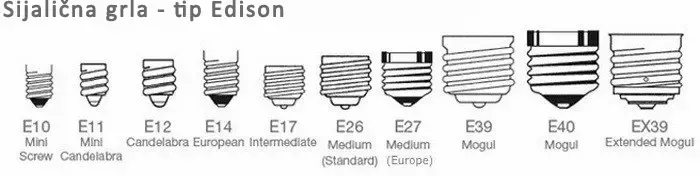
The selected bulb should have a bulb socket that matches the lamp socket, and if that is not the case for some reason, then bulb adapters are used.
POWER SUPPLIES AND LED BULB ELEMENTS
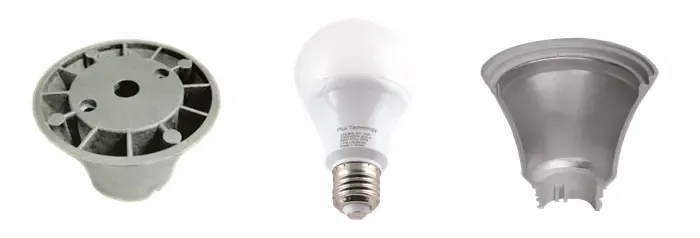
LED bulbs consist of an LED chip, electronics, heat sink, and housing with a socket. There are LED bulbs that use alternating current voltage of 220V. LED bulbs that operate on 12V direct current voltage use a necessary transformer that converts the 220V voltage from the grid into 12V voltage.
If you use a standard LED bulb in combination with a dimmer for light intensity control via potentiometer, keep in mind that in addition to drastically reducing its operating life, unwanted effects may occur such as buzzing and crackling of the LED bulb electronics or even light flickering. In this case, when you have a dimmer, it would be best to use a dimmable LED bulb, which as a rule are somewhat more expensive than standard LED bulbs that are not dimmable.
The third rule when buying LED bulbs states that if you use a dimmer to adjust light intensity, you must choose a dimmable LED bulb
LED BULB LIFESPAN
LED lighting manufacturers have a legal obligation to declare the expected operating life of the bulb. Depending on the manufacturer's quality, the expected lifespan of LED bulbs ranges from 15,000 up to 50,000 operating hours. If we compare this with the expected operating life of a classic, incandescent bulb, which is between 750 - 1500 operating hours, it is clear that the difference is enormous.
However, do all LED bulbs really reach their full operating life? The answer is no, and the reason is most often overheating or poor electronics!
Whatever you might think, LED bulbs do heat up and emit heat during operation, but this heat is incomparably less compared to other types of bulbs. Although the heating is incomparably less than with other types of bulbs, it is still not negligible. An LED bulb releases a certain amount of heat through the heat sink located in the bulb's housing.
The problem arises when the bulb is installed in closed ceiling fixtures, lamps, and chandeliers where air circulation and flow are not possible, so overheating can drastically reduce the working life of the LED bulb. For this reason, it is highly recommended that bulbs be installed in open or at least partially open lamps, chandeliers, and ceiling fixtures.
Here we come to the last, fourth rule when buying LED bulbs, which suggests checking the warranty period with the seller. Higher quality products usually have a warranty longer than the legal minimum of 2 years.
We hope that with this brief guide we will help you to properly replace conventional or other bulbs with LED bulbs. What is certain is that with LED bulbs you achieve absolute savings in electricity consumption and that it is an investment that is somewhat more expensive at the beginning but pays off in the long run.
In our wide range of products that we offer to the market, LED bulbs are now also available as a completely new, domestic product. You can see more about our bulb offerings in the store.